“We just need scheduling.” It’s how most construction software conversations start, and it sounds like the easy option. It rarely is. The real decision sitting underneath that sentence — a single point solution versus a construction software platform — is the difference between fixing one task this quarter and protecting your cash flow, margins, and data for years. And it’s finance, not the person who asked for scheduling, who ends up living with the consequences.
Where the point-solution trap begins
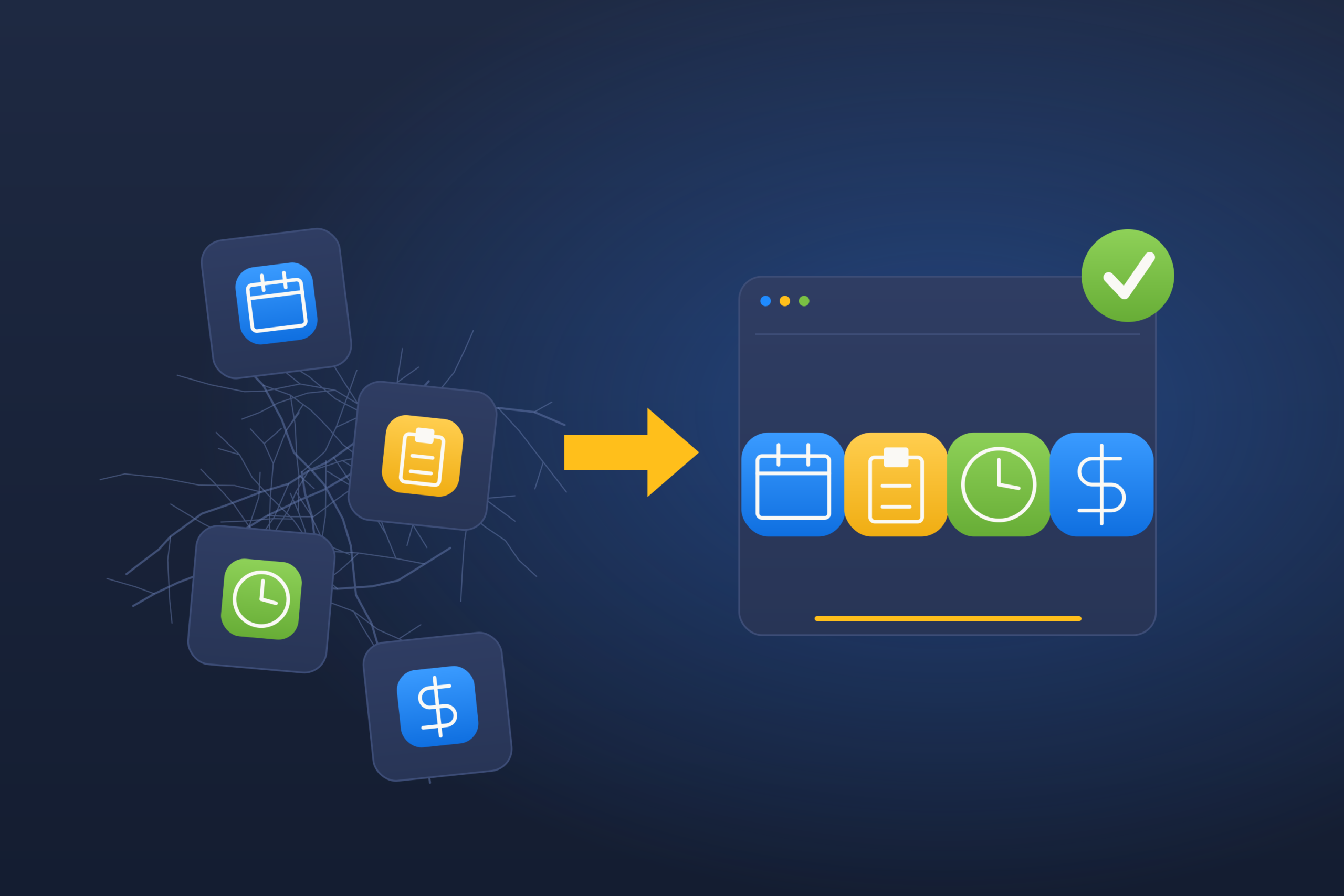
Picture a civil contractor that bought a slick scheduling app two years ago. It does exactly what the brochure promised. But the hours it captures still get exported to a spreadsheet, re-typed into the accounts system, and chased down every fortnight when a docket goes missing. The tool works perfectly. The business around it doesn’t.
That’s the trap. It isn’t a bad product — it’s a good product with no way to talk to anything else. Buy a tool for scheduling, another for timesheets, a third for safety forms, and a year later you have five logins, five invoices, and a person whose job is quietly to copy numbers from one screen into another. And the pile keeps growing: the construction software market is expanding at close to 10% a year, so there’s always another specialised app to bolt on — and another seam for finance to reconcile.
Here’s the part that’s easy to dodge in a sales pitch: a tool that never connects to anything doesn’t sit there harmlessly. The work flows around it instead of through it, and eventually someone in finance asks why you’re paying for software they still can’t see.
What a construction software platform actually is
A construction software platform connects the workflows a point solution keeps apart. Scheduling, field data capture, timesheets, compliance, and billing all feed one another — and feed your accounting system. Instead of five disconnected tools, you get one operational source of truth that hands finance clean, verified data the same day the work happens.
This is not about replacing your accounting system. Your ERP — whether that’s Sage, Viewpoint, Jobpac, or something else — stays the system of record for the general ledger, statutory reporting, and final invoice posting. The platform sits in front of it, turning raw site data into structured records and pushing them through, instead of leaving that data stuck on paper dockets and in spreadsheets.
There’s a subtler difference, too, and it’s the one that separates a good buy from a wasted one. A point solution usually just digitises a process you already run — often a process that was clumsy to begin with. You end up with a faster version of the same bottleneck. A platform is the chance to fix the flow itself: not paper moved onto a screen, but scheduling, sign-off, and billing redesigned so the data gets entered once and arrives in finance ready to use.
Why finance should care about the difference
So why does this land on the finance desk rather than the ops one? Because every gap between those disconnected tools is a gap finance pays to bridge. Data re-entered by hand breeds errors. Billing stalls while someone hunts for a docket, and days sales outstanding drifts upward. A variation captured on site never makes it onto the claim, and the revenue simply evaporates. Month-end turns into a reconciliation marathon because no single system holds the full picture.
Connect those workflows and the maths flips. Verified data flows from site straight into billing, so invoices go out in days instead of weeks. Fewer mismatches mean fewer disputes, cleaner books, and faster collection. And finance finally gets the live job-cost view that makes a WIP or forecast review a planning exercise rather than an autopsy. In a business that runs payroll weekly while waiting 60 to 75 days to be paid, every day you shave off that gap is working capital handed back.
What a construction software platform means day to day
The payoff looks different from each seat. A controller gets a centralised billing trail and the audit readiness that comes with it. A CFO gets working-capital headroom and a forecast solid enough to take to the board. A project cost controller sees budget against actual while there’s still time to act on it, not three weeks after the job’s moved on.
And none of it has to happen at once — which is the detail that quietly kills the “it’s too big a change” objection. You solve the most painful workflow first, prove the value, then fold the rest in over time. You’re not ripping everything out on day one. You’re choosing a foundation that grows with you instead of another tool to untangle later.
The real choice
The choice was never “scheduling tool” versus “expensive platform.” It’s whether your next purchase adds another seam for finance to manage, or removes one. A point solution feels simpler on the day you sign. A construction software platform is what still looks smart two years later — one connected source of truth feeding your ERP and protecting your cash flow. If you’re weighing the two, the most useful first move is a conversation about how the best contractors stage it. Book a demo and we’ll map it against your business.